7 essential checks before a long drive
In the UK, the average annual mileage is under 8,000 miles and the average journey distance is only about 10 miles. Whilst long distance driving is a regular task for some drivers, most do it rarely, if at all. With that in mind, do you think you or your car are ready for that infrequent longer journey? If you want to be sure, carry out these 7 essential checks before a long drive.
Engine oil level
The correct engine oil level and grade is critical for smooth and lasting engine operation. For an accurate measurement, make sure you check your oil level with your car parked on a level surface.


To check your oil level, pull the dipstick out of the engine, wipe the oil off with an old rag or some blue roll so that you can see the minimum and maximum mark on the bottom of the dipstick (highlighted in the above image). Re-insert the dipstick fully before removing it again to get your oil level reading.
If the oil level is low, it needs to be topped up using the correct oil grade. For example, my Passat uses 5W-30 longlife oil. To find out the correct grade for your vehicle, consult the Owner’s Manual. Top the oil up bit by bit, re-checking the level each time you pour some oil in, and make sure not to overfill it.
Coolant level
In all modern cars, the coolant tank is located in the engine bay and, like your oil dipstick, is marked with a minimum and maximum. Coolant regulates the temperature of your engine allowing it to run efficiently and preventing it from overheating. This means it is important to have the correct coolant level.

Like engine oil, there are different types of coolant and you’ll be able to find out which type your car requires in the Owner’s Manual. If your coolant level is low, top it up to the maximum mark with a mixture of coolant and water (you can buy pre-mixed bottles).
Again, it is important that you do not overfill your coolant as the extra pressure created could cause leaks in the system.
Screenwash level
The last thing you want whilst driving is to not be able to see where you’re going. Unless you’re lucky enough to get a bit of rain, that’s what will happen if your screenwash is left empty.
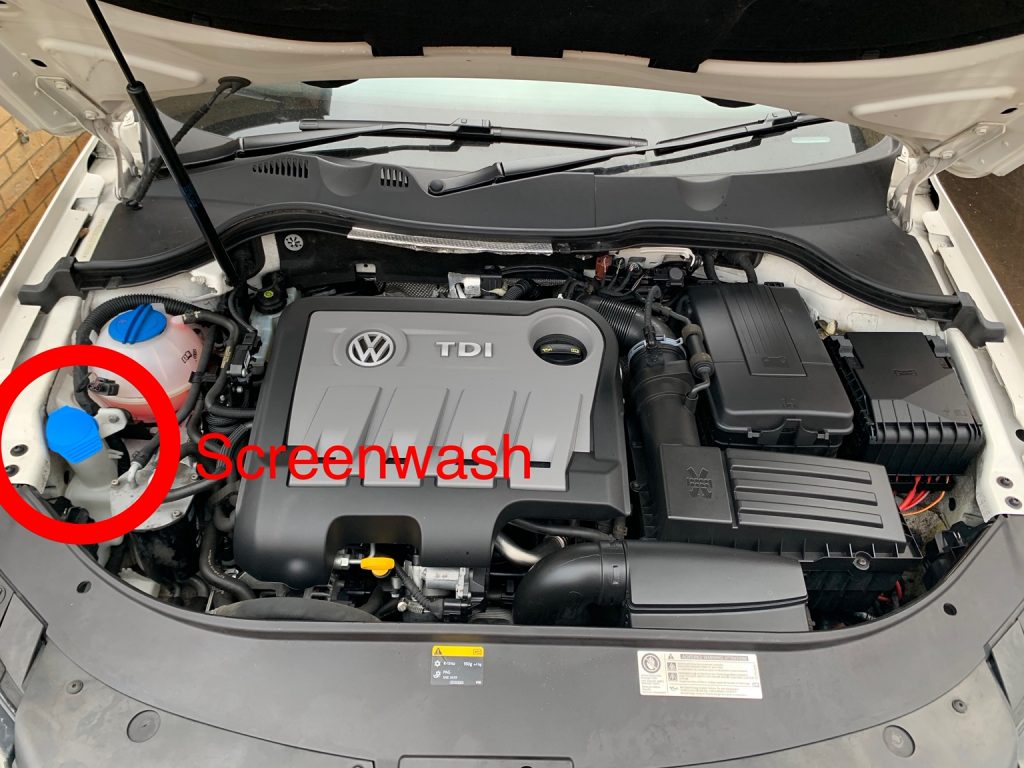
If you need to, you can just fill it up with water. Whilst you’ll get away with that in the summer, you might find it starts to freeze up in the winter months. I would recommend using actual screenwash throughout the year, though.
Mixing screenwash in with the water provides a number of benefits. Firstly, it’ll prevent it from freezing and blocking the pipes and jets. Also, it’ll clean more effectively and it often smells quite nice, too!
Lights
Again, the last thing you want whilst driving is to not be able to see where you’re going. For that exact reason, it’s vital that you check your lights. Not only will all of your lights working correctly benefit you, it’ll benefit the other road users as well – they need to see where you are as much as you need to see where you’re going.
It helps to have a second person around to do this – one person needs to be in the car with the ignition on operating the lights, the other needs to check they’re all working.
A good order in which to run through the front lights is:
Indicators, side lights, dipped beam, full beam, fog lights (if fitted).
Similarly, a good order to check the rear lights is:
Indicators, side lights, brake lights, reversing lights, fog lights.
Replace any bulbs that you find to be not working or take your car to somewhere like Halfords and they’ll do it for you at a small cost.
Tyres
There are two things to check when it comes to your car’s tyres – pressure and tread depth.
Tyre pressure is important as the correct pressure will improve your car’s fuel economy, handling and braking. Find out what the correct pressure is for the tyre size fitted to your car. There may be a sticker containing this information somewhere on the car. If not, it should be in the Owner’s Manual.
If you have a pump at home, you can use that to check and adjust the pressures. If not, pretty much every petrol station in the country has the facilities to do so and it’s normally only about 50p.


The tyre tread depth is just as important as the pressures, if not more so. Excessively worn tyres will affect handling, braking distances and performance in wet or slippery conditions. The legal wear limit is 1.6mm of tread across the middle 75% (indicated in the image above), all the way around the tyre. Tyres worn past the legal limit can land you with three points on your licence and a fine of £2,500 per illegal tyre. That’s if it hasn’t already caused a crash.
You can get digital or analogue tread depth gauges that will range from about £3-£10. You can pick them up in Halfords, part shops or on Amazon. They’re handy to have as they allow you to keep an eye on the condition of your tyres. I’d start to consider a new set once they get start to get below about 3mm.
Brakes
I don’t think I really need to explain why your brakes are so important, do I? All you’ll really be able to do on your driveway is a quick visual check but it’s important nonetheless.
Have a look through your wheels and check the brake discs and pads. With the discs, you’re looking for any surface wear or corrosion that may prevent the pads from stopping the vehicle effectively.
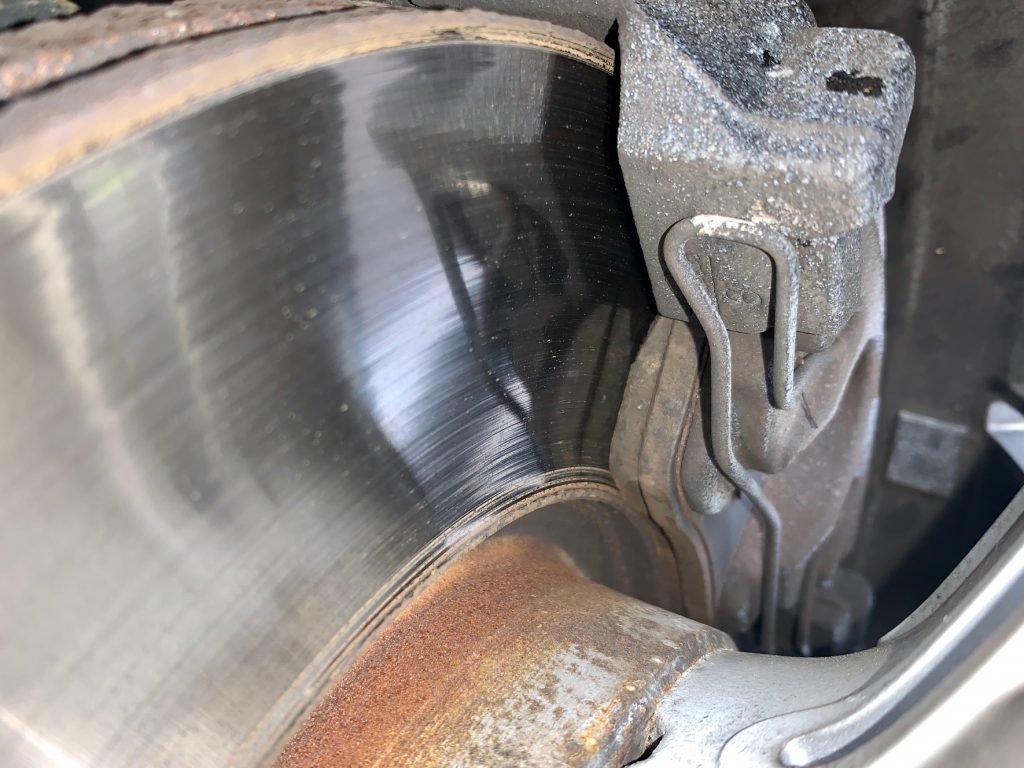
When inspecting the pads it’s the thickness you need to be checking. Anything under 1.5mm thick is worn enough to fail an MOT. Just to be safe, I’d recommend having them properly checked at a garage if you feel they’re any less than about 3mm thick.
Route/traffic
No one likes to be stuck in traffic. It’s annoying, it’s boring and it wastes both time and fuel. It’s worth remembering there will always be more than one way to get to your destination.
Before you leave, you can Google traffic reports for your route to check for traffic, road closures etc. There are route planners online that will help you avoid traffic and delays.
In terms of navigation, your Sat-Nav has limited functions and live traffic updates is not one of those functions. I’d recommend using a navigation app on your phone such as Waze. These apps are community based meaning users can input traffic information such as delays, accidents and closures. They also give you various route options based on both time and distance – some routes may be a few miles longer but take 15 minutes less.
And now you’re ready for that nice long drive to visit your parents or wherever it is you may be going.
I hope you find this guide useful – let me know if you did in the comment section below or via our Facebook and Twitter pages.